

In this first nationwide quantitative and qualitative survey, young Russian-speaking Jews – who immigrated from the Soviet Union or the post-Soviet states with their families as children and teenagers in the 1990s – were interviewed about their lives and growing up in Germany. The young adults speak about their experiences as ‘Russians’ and Jews in Germany’s immigrant society, about social advancement and discrimination, and their relationship with Germany and Israel; they also discuss family-shaped cultures of remembrance and Jewish self-identity, situated between predominantly secular lifestyles and processes of religious exploration.
The study provides insights into various areas of these young adults’ lives, as well as into their self-identities and practices as Jews in Germany. It highlights the social advancement of a young generation hailing from a highly qualified migrant group, but also their multiple experiences of exclusion as Jews, ‘Russians’ and migrants in Germany. For the children and young people, however, migration meant not only having to learn a different language and cultural codes, but also encountering a different understanding of Judaism. This applies to the organisation of the local Jewish community as a religious community, but also in relation to a collective Jewish self-image, for which the experience of the Holocaust and the resulting forms of remembrance culture are constitutive of the relationship between Jews and the surrounding non-Jewish majority society. Against this backdrop, the young adults speak about their relationship with Germany and Israel, their understanding of Judaism and their own Jewish identity – situated between ethnic origin, secular influences and religious orientation, and a family-shaped culture of remembrance in which both the Holocaust and the Second World War have their place.
Their statements reveal a natural sense of entitlement to a life in Germany, as well as an increasingly pluralistic culture of remembrance of the Holocaust, which, alongside the commemoration of Jewish victims, also includes the Jewish soldiers of the Red Army who defeated Nazi Germany. Furthermore, internal Jewish self-understandings and areas of conflict become apparent; these stem, on the one hand, from the question of the future status of the so-called ‘father Jews’ – those who identify as Jewish and were also recognised as such in the Soviet Union, but who, according to Jewish religious law, do not belong to the Jewish community. Furthermore, a tension between religion and secularism can be observed, which is reflected not only in the organisational structure of the communities but also, beyond that, in new religious social forms and post-traditional communities.
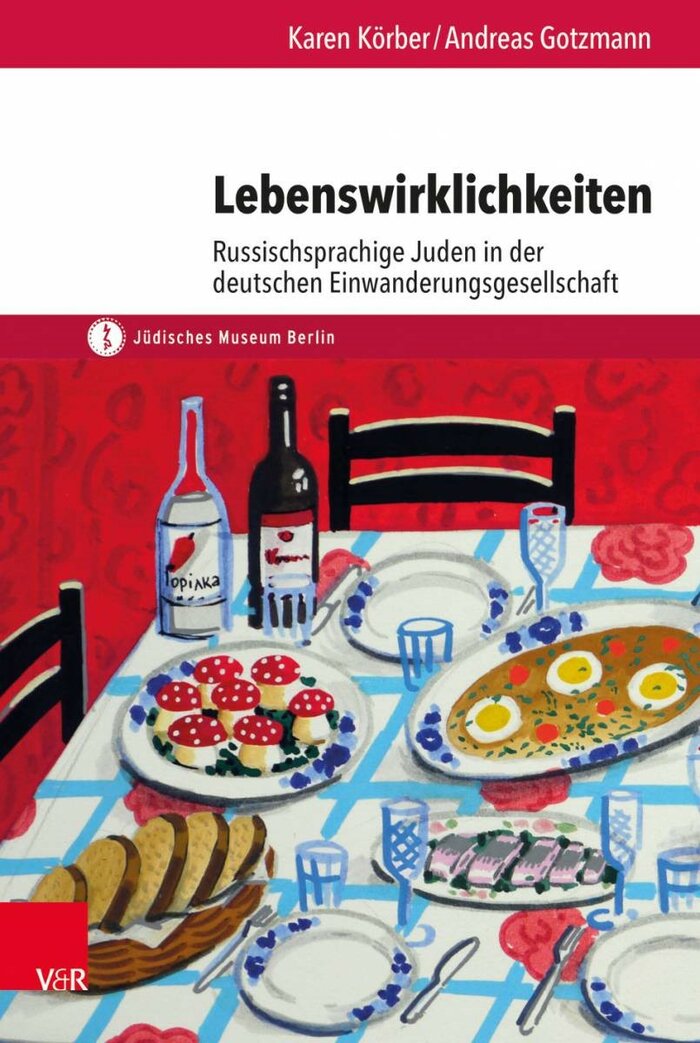
The research project was concluded in 2022 with the publication of the book *Lebenswirklichkeiten. Junge russischsprachige Juden in der deutschen Einwanderungsgesellschaft* (Everyday Realities: Young Russian-speaking Jews in German Immigrant Society) by Vandenhoeck & Ruprecht (with a contribution by Andreas Gotzmann).